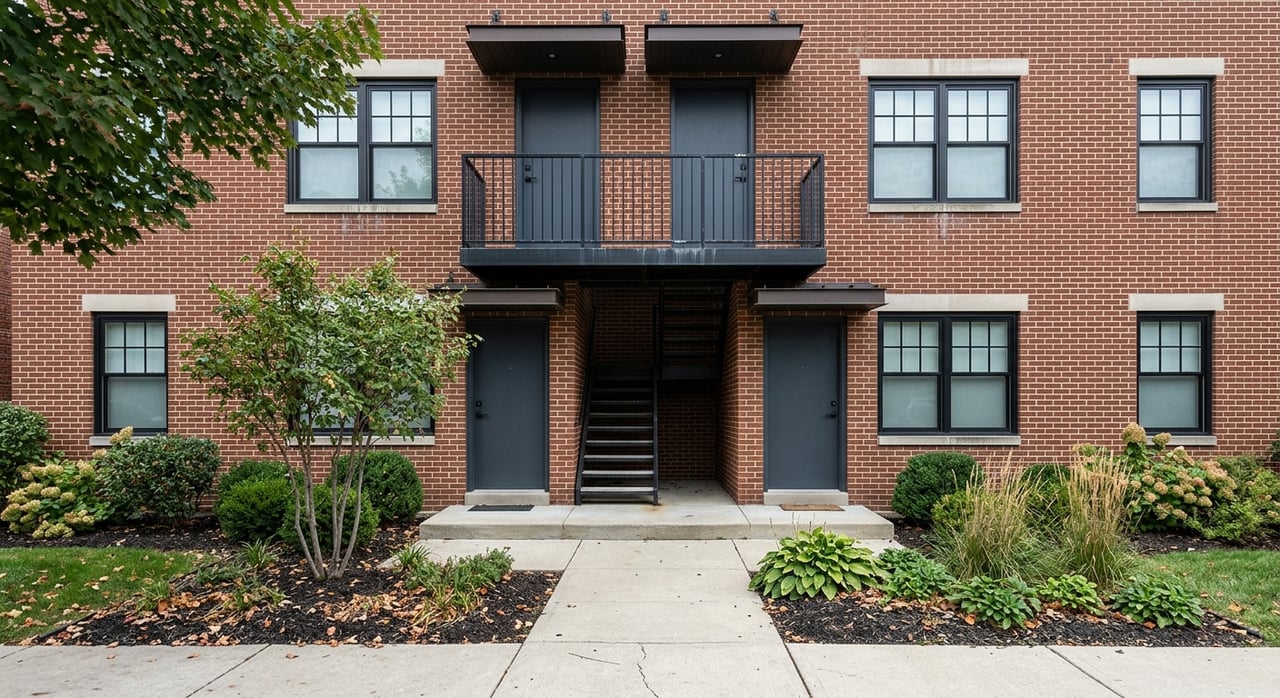
Trying to choose between a single-family rental and a duplex, triplex, or fourplex in Greenwood? That decision can shape your budget, your monthly income, and how much day-to-day management you take on. If you want a practical look at how these property types compare in Greenwood, this guide will help you weigh price, rent potential, turnover, and resale so you can move forward with more confidence. Let’s dive in.
Greenwood is a growing Johnson County suburb with an estimated 69,349 residents as of July 1, 2025, while Johnson County is estimated at 174,262 residents. Housing data also shows a market shaped heavily by detached homes, with 72% of housing in single-unit structures and about 61% owner occupancy.
That matters if you are investing here. In a market built around single-unit homes, single-family rentals often fit the surrounding housing stock more naturally, while small multifamily options tend to be harder to find and compare.
If you are looking at single-family rentals, Greenwood gives you more options. Zillow currently shows 387 single-family homes for sale, with many investor-relevant properties landing in the mid-$200,000s to mid-$300,000s.
In the visible listing sample, lower-priced homes appear around $239,000 to $240,000, while many typical three- and four-bedroom homes fall between roughly $295,000 and $359,900. Realtor.com also shows a Greenwood median listing price of $357,000, which lines up closely with Zillow’s median list price.
For many investors, that means the single-family side offers a broader menu of price points, layouts, and neighborhoods to evaluate. More inventory can also make it easier to compare deals and move when the right opportunity shows up.
Small multifamily is a different story. Open-market duplex, triplex, and fourplex inventory in Greenwood is thin, with Zillow currently showing only 2 duplex or triplex listings around $294,900 to $295,000.
At the larger end, Crexi shows one Greenwood apartment-building listing at $500,000. Broader Johnson County multifamily data on Crexi shows 6 listings averaging $1.175 million with a 6% median cap rate, which points to a much higher price tier once you move beyond a true small multifamily purchase.
The main takeaway is simple. In Greenwood, small multifamily can be harder to source, and the jump from a duplex to larger multifamily assets can be significant.
Rent is where many investors expect multifamily to clearly outperform. In Greenwood, the picture is a little more balanced.
Zillow’s rent data puts average rent in Greenwood at $1,862, with an overall asking-rent range from $770 to $2,700. It also shows a two-bedroom average of $1,395, a three-bedroom average of $1,850, and a four-bedroom average of $2,404.
On the single-family side, current three-bedroom rental listings run from about $1,499 to $2,500, and Realtor.com shows a Greenwood median rent of about $1.9K. That suggests small multifamily units often compete in the same general rent band as single-family rentals of similar size.
So where does multifamily gain an edge? Usually in income density, not necessarily rent per unit. A duplex may not command a dramatic rent premium unit by unit, but having two rent streams under one roof can change your monthly income profile.
Single-family investing is often easier to understand because the property itself is simpler. You usually have one lease, one household, and fewer shared-space issues to manage.
Research cited by Freddie Mac describes single-family rentals as relatively stable, noting a 70% retention rate versus 50% to 53% for apartments. HUD research also finds that detached single-family homes generally show less tenure change than smaller or attached structures.
For a Greenwood investor, that can translate into fewer vacancy events and fewer turnover-related tasks over time. In a city where 19.1% of residents moved in the prior year, reducing turnover points can matter.
The biggest strength of small multifamily is vacancy hedging. If one unit in a duplex is vacant, you may still have income from the other unit, which can soften the hit compared with a vacant single-family house that drops to zero rent.
That can make duplexes and fourplexes attractive if your top priority is keeping income coming in. It also gives you more flexibility if you need to adjust rents, make repairs one unit at a time, or lease units on slightly different schedules.
Still, more units usually mean more moving parts. You are likely managing more leases, more maintenance requests, and more turnover cycles in the same property.
One of the most practical differences in Greenwood is not just performance. It is availability.
With hundreds of single-family listings and only a very small number of openly marketed small multifamily properties, your search process may look very different depending on your strategy. If you want consistent deal flow and a wider set of comparables, single-family usually gives you more to work with in this market.
If you are set on small multifamily, patience becomes more important. Limited inventory can mean fewer chances to buy, tighter competition when a property does hit the market, and less data to benchmark value.
Greenwood’s housing mix matters on the exit side too. Because 72% of local housing is in single-unit structures, single-family homes often benefit from broader appeal when it is time to sell.
That does not guarantee a better return, but it can expand your buyer pool. An entry-to-mid-market house may attract investors, owner-occupants, or move-up buyers depending on condition and price, while a duplex or fourplex often appeals to a narrower group.
If your long-term plan includes flexibility, that wider resale audience can be a real advantage. It is one reason many investors view single-family as the easier property type to buy, hold, and eventually exit.
Before you buy, it is smart to think beyond price and rent. The City of Greenwood says residential inspections are scheduled through the Building Commissioner’s office and follow state-approved codes.
That does not make one property type automatically better than the other, but it does reinforce the need for careful due diligence. More units can mean more systems, more wear points, and more coordination during leasing, repairs, and turnover.
If you want a more hands-on portfolio, small multifamily may fit your style. If you want fewer operational touchpoints, single-family may be the cleaner match.
There is no one-size-fits-all answer in Greenwood. The better fit depends on what you want your investment to do.
Single-family may be the better choice if you value:
Small multifamily may make more sense if you value:
In Greenwood, this decision is less about a huge rent gap and more about how you want to operate. Single-family usually wins on simplicity, inventory, and resale breadth, while small multifamily tends to win on income density and vacancy hedging.
Because Greenwood has limited openly marketed small multifamily inventory and a housing stock dominated by single-unit homes, many investors find single-family easier to source and easier to manage. But if you are comfortable with more moving parts, a well-bought duplex or fourplex can still be a strong fit.
If you want help comparing active Greenwood opportunities, estimating realistic rent ranges, or building a buy-and-hold plan that fits your budget, Kelly Mclaughlin can help you sort through the numbers and find the right path.
Browse active listings in the area or contact me for market listings.
Have an expert help you find out what your home is really worth.
Buying or selling, flipping or renting—Kelly McLaughlin knows how to spot the right deal, avoid the wrong ones, and guide you with clarity and confidence. With Kelly, you're not just getting an agent. You're getting an experienced investor who’s walked the walk and knows how to make every move count.